Tinai: An Ancient Tamil Blueprint for Living With Nature
Prof Nirmal Selvamony's book 'Tinai Philosophy' presents the ancient Tamil lifeway as a model for sustainable coexistence in the Anthropocene.
A new academic work is drawing attention to an ancient Tamil worldview as a possible guide for navigating the ecological pressures of the current era. In his book, Tinai Philosophy: The Indigenous Lifeway for the Anthropocene, Prof Nirmal Selvamony examines the concept of Tinai, which he presents as a comprehensive philosophy and way of life rooted in the harmonious coexistence of humans with all other living beings.
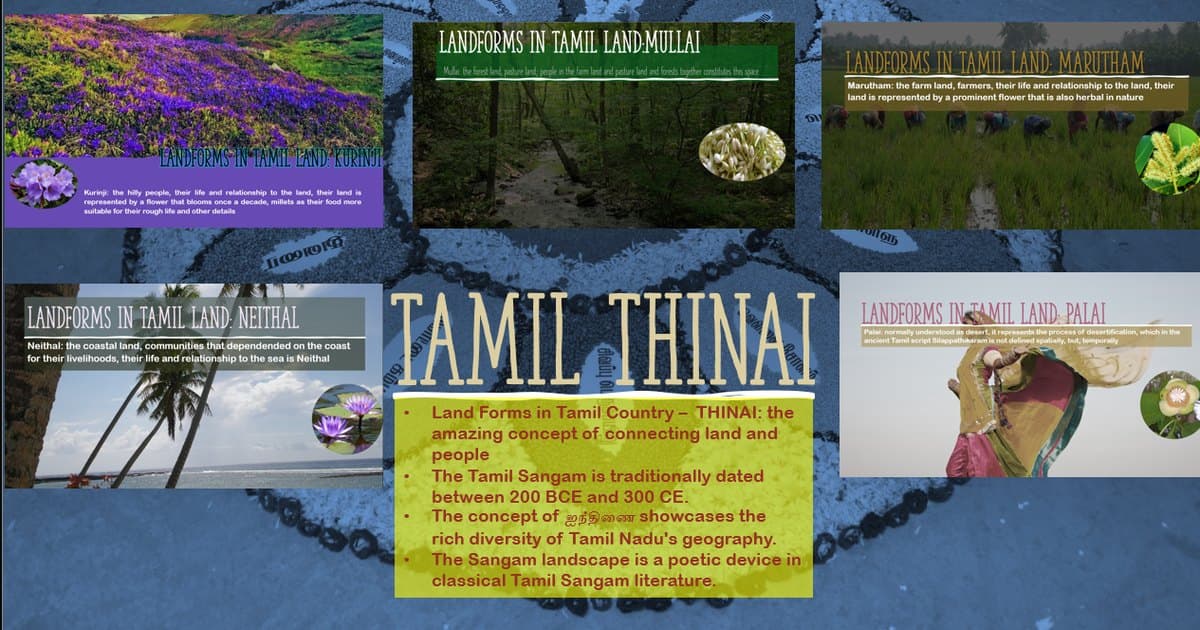
The term 'Tinai' originates from classical Tamil literary traditions, where it was used to classify landscapes and the human emotions and livelihoods associated with them. Prof Selvamony's interpretation, however, extends beyond literary classification. He positions Tinai as an indigenous lifeway — a practical and ethical framework that integrates human activity within the natural world rather than setting it apart from it.
Central to this philosophy is the idea of mutual dependence. Unlike modern frameworks that often treat nature as a resource to be managed or exploited, Tinai emphasizes a reciprocal relationship. Human communities are seen as one part of a larger ecological and social web, with duties and responsibilities toward other species and the land itself.
The book's subtitle, referencing the Anthropocene — the proposed geological epoch defined by significant human impact on Earth's systems — signals its contemporary relevance. Prof Selvamony argues that this ancient Tamil perspective offers valuable insights for addressing modern environmental crises. By revisiting such indigenous knowledge systems, the work suggests, societies can find alternative models for sustainability that are grounded in respect and balance rather than extraction.
Through this exploration, the book contributes to a growing discourse on decolonizing environmental thought and recognizing the wisdom embedded in traditional cultures. It makes a case for looking backward to move forward, proposing that the principles of Tinai could inform a more ethical and ecologically sound way of living today.