Toho's Poison Pill Faces Court Challenge From Activist Investor
3D Investment Partners seeks court injunction against Toho Holdings' poison pill, challenging its use against non-control-seeking activists.
Singapore-based hedge fund 3D Investment Partners has filed a request with the Tokyo District Court seeking an injunction against Toho Holdings' takeover defence, escalating a legal battle over the use of poison pill strategies against activist investors in Japan.
The move challenges whether Japanese companies can deploy such defences against shareholders who are not seeking control. Japan is currently the world's second-largest market for activist campaigns after the United States.
3D, which is Toho's largest shareholder, wants to increase its stake from 24% to 27%. However, Toho's poison pill provision would trigger a discriminatory warrant issuance designed to dilute 3D's holding if it acquires additional shares.
At the company's annual general meeting in June, shareholders backed the proposal authorising the measure with 54.7% support.
3D argues that a 27% stake falls short of the level Toho has said would confer effective veto power, and that it has no intention of acquiring management control. Therefore, the prerequisite for triggering the measure—a threat to management control—does not exist, the fund said.
Toho, however, told shareholders ahead of the June meeting that a 27% stake would allow 3D to exert significant influence over management and potentially pressure it to prioritise short-term gains.
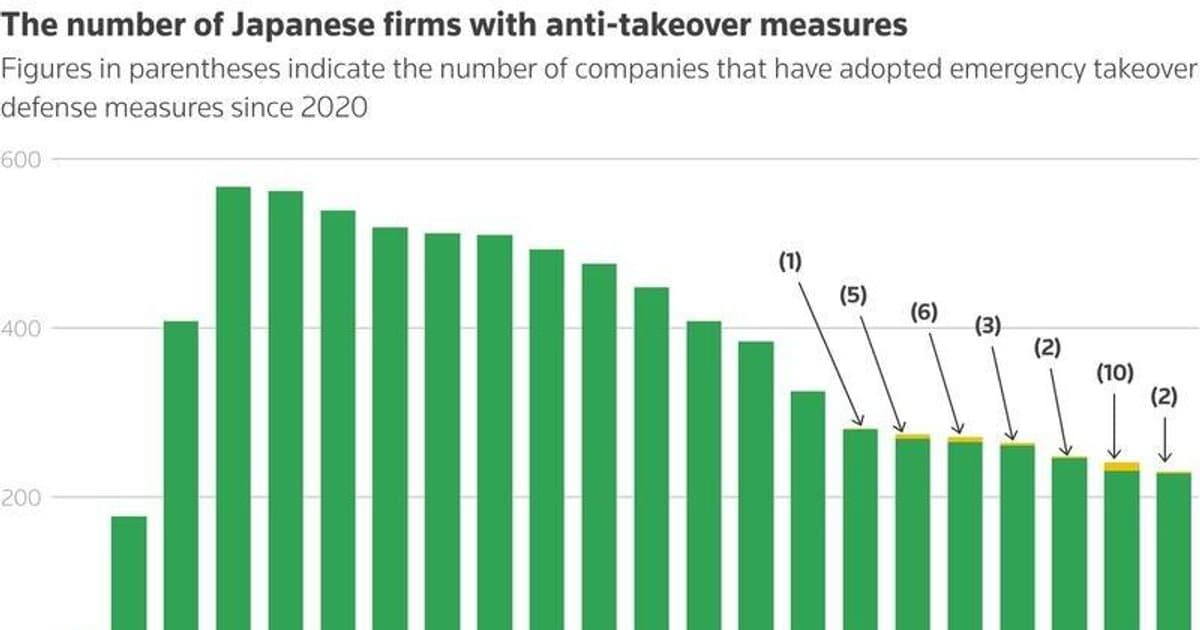
Japan's anti-takeover defences were once dominated by "pre-warning" poison pills adopted before a specific bidder emerged. Their use waned after governance reforms under former Prime Minister Shinzo Abe boosted scrutiny of shareholder voting.
More recently, contingency-based poison pills targeting specific investors have become increasingly common. Advisory firm IR Japan reports a record 10 such measures were adopted last year, often to prevent activist funds from raising stakes beyond roughly 20%—a level some companies argue can confer significant influence.
Government takeover guidelines permit poison pills aimed at giving shareholders time and information to assess a buyout bid. However, critics argue that using such measures against investors who are not seeking control risks entrenching management and undermining corporate governance efforts.
Manabu Matsunaka, a professor at Nagoya University Graduate School, said allowing such defence measures could weaken the disciplinary pressure on management from capital markets. "If management is confident its own strategy is right, it should devote its resources to explaining that strategy to shareholders, rather than seeking support for defense measures," he said.