Trump's $5,000 'Dividend' Pledge: Cost, Legality and the Road Through Congress
Trump has proposed $5,000 payments to US adults if Republicans hold Congress. The plan would cost $1.2 trillion and faces legal, fiscal and legislative hurdles.
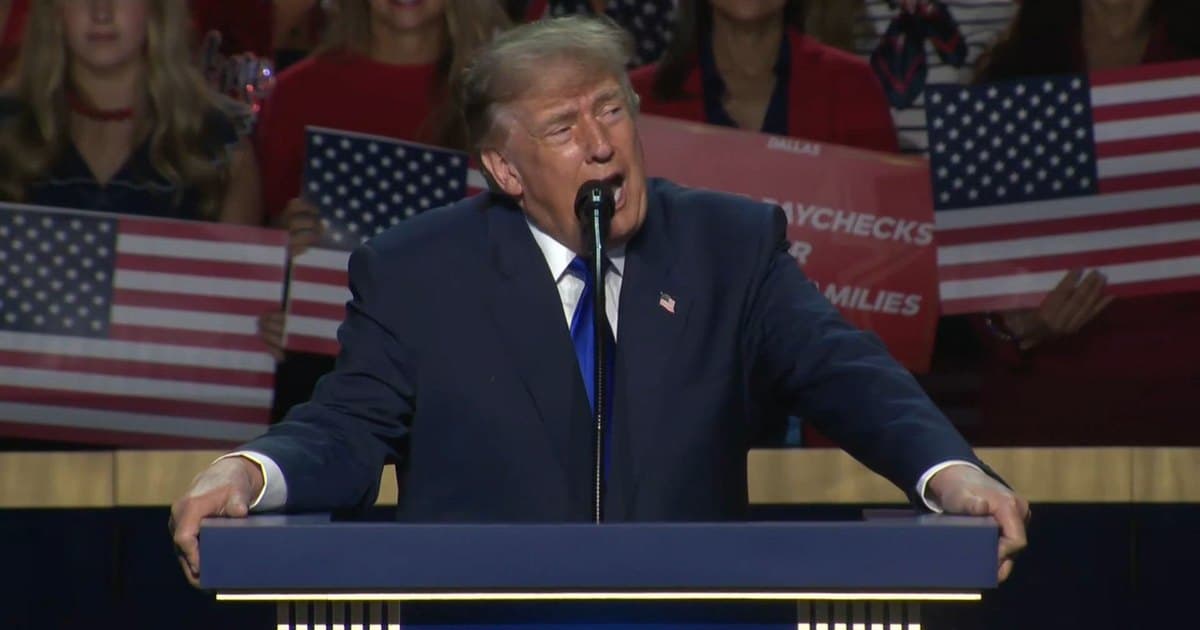
President Donald Trump has proposed a $5,000 "Trump dividend" payment to US adults, conditional on Republicans retaining control of the House of Representatives and the Senate in the November 3 midterm elections.
Who would receive the money
The payments would go to all adult US citizens — roughly 240 million people, based on US Census figures. That works out to a total cost of about $1.2 trillion.
Vice President JD Vance, speaking on Fox News after Trump's speech, suggested the government could tap tariff revenue, which has been boosted by Trump's trade wars. The Congressional Budget Office estimates tariff collections at $167 billion so far in the fiscal year ending September 30 — far short of the proposal's cost.
Funding the payments would instead widen the government's budget gap. The CBO estimates the government will spend $2.1 trillion more than it collects in the current fiscal year, a figure projected to grow as the population ages.
Is it legal?
Candidates routinely promise benefits in exchange for votes. During the 2024 presidential campaign, Trump promised tax breaks for seniors, tipped workers and other groups, and delivered them in his "One Big Beautiful Bill" the following year. Democratic candidates, including President-elect Joe Biden, promised a third round of COVID-19 relief checks in a Georgia special election in 2021 and delivered after winning control of Congress.
The US Supreme Court has ruled that a comparable promise is legal. In a unanimous 1982 decision, the court overturned a lower-court ruling that had invalidated the election of a Kentucky official who promised to save taxpayer money by lowering county commissioners' salaries.
Elon Musk, the world's richest person, offered voters a chance to win $1 million in 2024 if they signed a petition supporting the Constitution. That drew legal challenges, still unresolved, from voters who said they had no real chance to win because Musk was seeking people to support his political action committee, which backed Republican candidates.
Challenging Trump's dividend in court would be difficult, as voters might struggle to show they had been directly harmed.
Would Congress have to act?
Yes. Congress holds authority over spending under the US Constitution.
Republicans control both chambers by narrow margins, and several members of Trump's party have already reacted favorably to the idea. Democrats would be certain to oppose any legislation and could block passage in the Senate, where a supermajority of 60 votes is needed to advance most legislation.
Republicans could invoke a complex budget process to bypass Democrats and approve the bill along party lines. They have used this approach successfully twice since Trump's January 2025 return to office, but have struggled to advance a third such package.
There is little time before the November 3 elections, as the House is scheduled to be in session for only one week before then. Congress could also try to act in a "lame-duck" session after the election.
Precedents for direct payments
Congress approved three separate direct payments in March 2020, December 2020 and March 2021 as part of sweeping relief packages to help people weather the economic disruption of the COVID-19 pandemic. Those payments — up to $1,200, $600 and $1,400 per adult, respectively — were phased out for higher-income people. That amounted to 476 million payments totaling $814 billion, according to a congressional oversight committee. Investigators found numerous logistical problems, including fraud and $1.4 billion sent to dead people.
Economic and market effects
Economic studies have shown that pandemic-era stimulus checks contributed to the subsequent rise in inflation by substantially boosting consumer demand. Those payments also lifted the stock market, with a measurable spike in retail trading volumes following each wave of stimulus deposits.
Trump's proposed dividend could upend bond markets if the government funded it through borrowing. The massive influx of new Treasury debt, combined with revived inflation fears, could drive bond prices sharply lower and send yields soaring. That could push government borrowing costs higher, further pressuring the US budget at a time when interest payments already exceed military spending.
Yields on benchmark 10-year US Treasury bonds ticked up to 4.91% on Thursday as investors assessed Trump's proposal.
Similar promises in the past
Trump promised a similar $2,000 dividend in November 2025 tied to tariff revenue and said it would not apply to wealthy people, though no follow-up action was taken. He successfully sent a one-time "warrior dividend" payment of $1,776 to roughly 1.45 million military members in December 2025, drawing on money already approved by Congress.
On Thursday, Trump's White House said nearly 1 million Americans will get $500 payments to account for what it describes as excess fees charged for Affordable Care Act health insurance.