UK's 30-Year Bond Sale Hits Record Yield, Straining Public Finances
Britain sells £4.25bn of 30-year bonds at a record yield of 5.8168%, reflecting high global borrowing costs and fiscal strain.
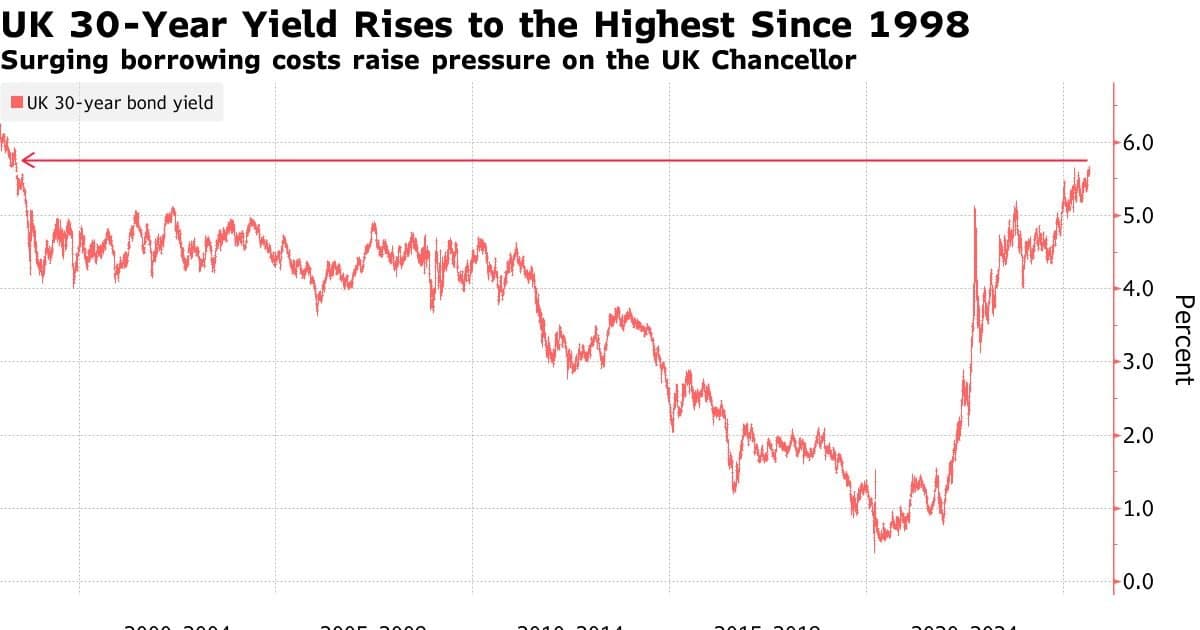
Britain has sold £4.25 billion ($5.75 billion) of 30-year government bonds at the highest yield since comparable records began in 1998, underscoring the fiscal pressure facing the new finance minister ahead of his first budget.
The bond, a 5.375% gilt maturing in 2056, was priced via syndication at a yield of 5.8168%. This surpasses the previous record of 5.79% set at a Debt Management Office auction in May 1998 and locks in the impact of a recent surge in global borrowing costs.
Britain currently has the second-highest government borrowing costs among larger advanced economies, trailing only Australia. Last week, global concerns about inflation linked to the U.S.-Iran conflict pushed 30-year gilt yields to their highest level since early 1998.
Despite the elevated cost, investor demand was robust. Orders exceeded £85 billion, and the bond was priced at the tight end of initial guidance, just 0.75 basis points above the existing 2055 gilt. Bank of America, Goldman Sachs, J.P. Morgan, Santander, and UBS led the transaction.
Matthew Amis, investment director at Aberdeen Investments, said the syndication showed demand for gilts at these yields remains healthy, adding that a poorly received sale would have put further pressure on government finances.
Long-dated conventional debt once formed a major part of British issuance, but rising costs and falling pension fund demand mean it is on track to make up less than 10% of the £246 billion of gilt issuance planned for this financial year.
Chancellor John Healey, who delivered his first major speech on Monday, has stressed fiscal discipline ahead of his October 28 budget. His predecessor, Rachel Reeves, had a modest £24 billion of leeway to meet medium-term goals for a balanced current budget by 2029/30, but those forecasts were finalised before the U.S. and Israel launched attacks on Iran, which most economists expect to worsen public finances.
The Office for Budget Responsibility had already forecast debt interest costs would reach £109 billion this year, equivalent to 8.4% of public spending.