Ukraine Braces for Harsh Winter as Russian Strikes Deepen Budget Crisis
Ukrainian officials warn of a difficult winter as Russian attacks on infrastructure and ports cost about 1.5 percentage points of GDP and budget revenue falls short.
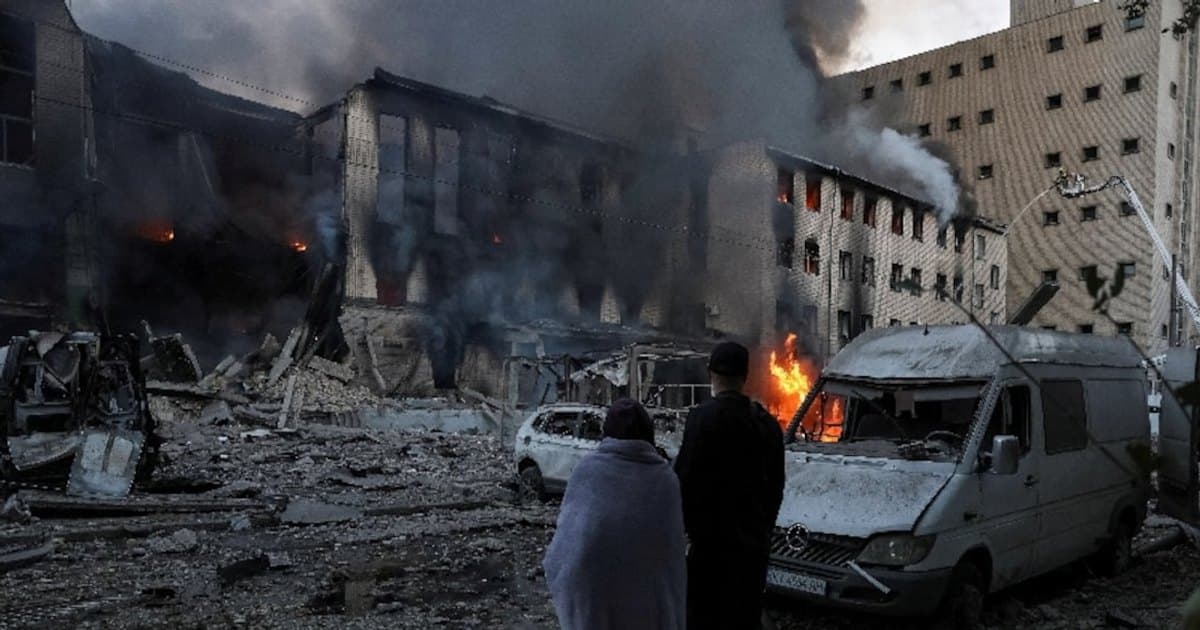
Ukraine is preparing for a severe winter as intensified Russian attacks on infrastructure and export industries deepen a budget crisis, Ukrainian officials said on Saturday.
Speaking at a YES conference in Kyiv attended by investors, officials and diplomats, Economy Minister Oleksandr Kravchenko said damage to infrastructure and fixed assets from Russian air strikes was estimated at close to $10 billion this year. The broader economic cost of the attacks and the de facto blockade of Ukraine's ports was put at about 1.5 percentage points of gross domestic product.
"We anticipate a very difficult winter in terms of both critical infrastructure, which is being destroyed every day by Russian attacks, but also in terms of overall economic conditions in the country," Kravchenko said, adding that the budget and fiscal space were very constrained.
More than four and a half years into the war, with front-line fighting largely stalled, both Russia and Ukraine have increasingly targeted logistics networks and other economic assets. For over two weeks, Russia has carried out near-constant attacks on Kyiv using faster jet-powered drones, disrupting daily life, business and government operations. Both sides deny deliberately targeting civilians.
Moscow has also effectively blocked Ukraine's Black Sea ports by stepping up air attacks on southern regions. Kravchenko said about $40 billion in export revenue is at risk from the blockade. Agricultural products and iron and steel, Ukraine's main exports, are shipped through those ports.
As attacks damage infrastructure and industry, domestic budget revenue has come under pressure. Roksolana Pidlasa, head of the parliamentary budget committee, said domestic revenue underperformed by $1.35 billion in the first eight months of the year, with a quarter of those losses recorded in August alone.
She said the war was becoming increasingly expensive and Ukraine could no longer fully finance its defence needs from domestic resources as it had in previous years. Ukraine spent about $42 billion on defence in the first eight months of the year, excluding in-kind military support, while domestic revenue generation and local borrowing yielded only $39 billion in that period.
"Unfortunately, this year the war has gotten so expensive that we can't even cover our share of the costs," Pidlasa said.
The daily cost of the war rose to about $190 million this year from $140 million in 2024, driven by inflation, expanded troop numbers, mounting social payments for families of fallen soldiers and higher ammunition consumption, she added.
Ukraine faces an additional funding gap through the end of the year for its defence. The government is looking at cutting or postponing non-military budget spending and is negotiating with Western partners for more financial support, but no clear and fast solution has yet emerged.