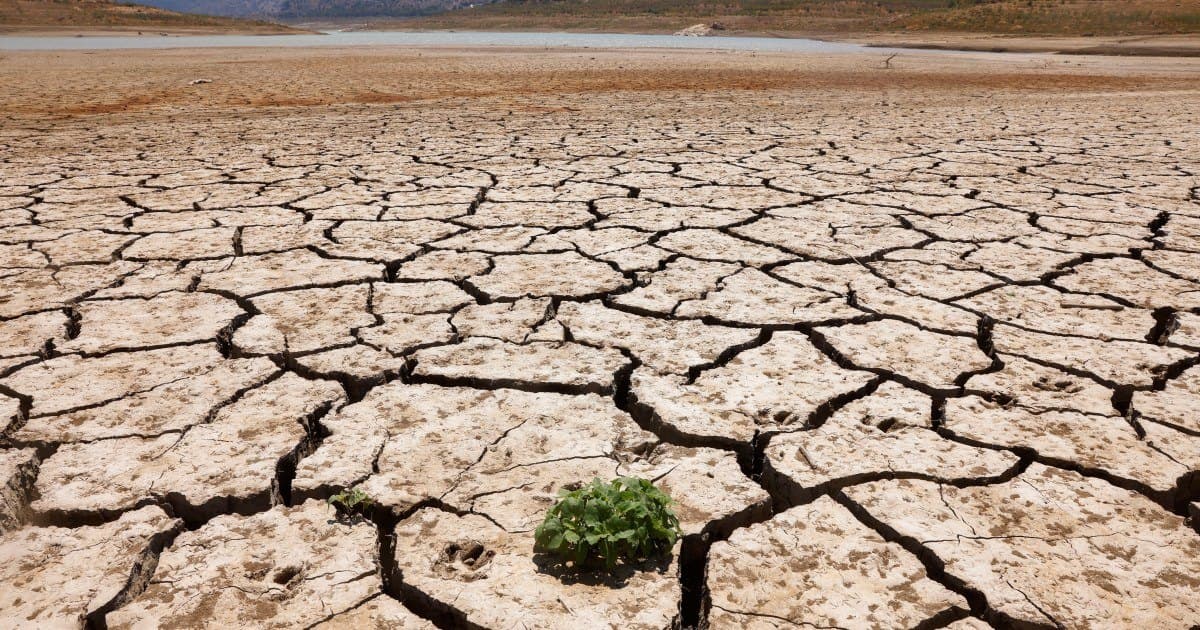
Global drought crisis deepens as UN land talks end without binding deal
UN desertification talks in Mongolia concluded with nations unable to agree on a binding drought pact, even as land degradation and climate change intensify water scarcity worldwide.
Representatives from nearly 200 countries concluded United Nations desertification talks in Ulaanbaatar, Mongolia, on Friday, confronting a worsening global drought crisis. The biennial conference, organized by the UN Convention to Combat Desertification (UNCCD), focused on strategies to maintain productive land as climate change intensifies and degraded soils lose their capacity to retain water, produce food, and sustain livelihoods.
According to the UNCCD, up to 40% of the world's land is now degraded. Yasmine Fouad, the convention's executive secretary, noted that droughts are increasingly occurring in regions previously considered low-risk. "Drought is coming coupled with the impact of climate change," she said. "It's becoming more frequent, more intense and more prolonged."
A key unresolved issue was whether to establish a legally binding global drought agreement. Delegates postponed this decision to the next round of talks in Egypt, marking the second consecutive time the matter has been deferred.
Specialists at the conference emphasized that drought severity is increasingly shaped by land conditions before rainfall deficits occur. Healthy soils absorb and store water, supporting crops and natural ecosystems during dry spells. In contrast, degraded soils shed water quickly and lose productivity, heightening community vulnerability to rising temperatures and erratic rainfall. "You cannot maintain healthy soil without managing your water," Fouad stated.
The land-water nexus is critical for agriculture. Joao Campari, global leader for food and agriculture at WWF International, warned that treating land and water as separate systems overlooks fundamental food security conditions. "If you don't have water, you don't have agriculture. If you don't have land, you don't have agriculture," he said.
With the global population rising, UN reports project a need for 50% more food by 2050 compared to 2012 levels. However, expanding production by clearing natural areas can worsen degradation, releasing soil carbon and reducing landscapes' water storage capacity. Land degradation also contributes to sand and dust storms, as unsustainable land use exposes soil to strong winds.
The 12-day conference launched a rangelands initiative, mobilizing $1.2 billion across 45 projects. The Asian Development Bank separately announced $2 billion for land degradation efforts in the Asia-Pacific region. Rangelands, which cover 54% of Earth's land surface and support about 2 billion people, are being converted to other uses at roughly four times the rate of forests. Campari noted these areas hold "twice the carbon that is in the atmosphere," making their destruction a significant source of greenhouse gas emissions.
Financing remains a major challenge. An estimated $355 billion annually is needed through 2030 for global land restoration, but current investment stands at about $77 billion, leaving a $278 billion annual gap. Private finance contributes only about 6% of total investment. While more than 70 countries now have national drought plans—up from three in 2013—these plans often lack funding for implementation.
Fouad urged governments to transition from drought plans to investment plans, involving private companies and local communities. A new Drought Resilience Investment Facility, announced during the talks, aims to mobilize up to $400 million for water security, sustainable agriculture, and land restoration projects.
Esther Penunia, secretary general of the Asian Farmers Association, cautioned against using the unresolved legal question as an excuse for inaction. "We cannot wait for COP18 for solutions," she said. "We know we have solutions and we can do them as long as we have the necessary resources."