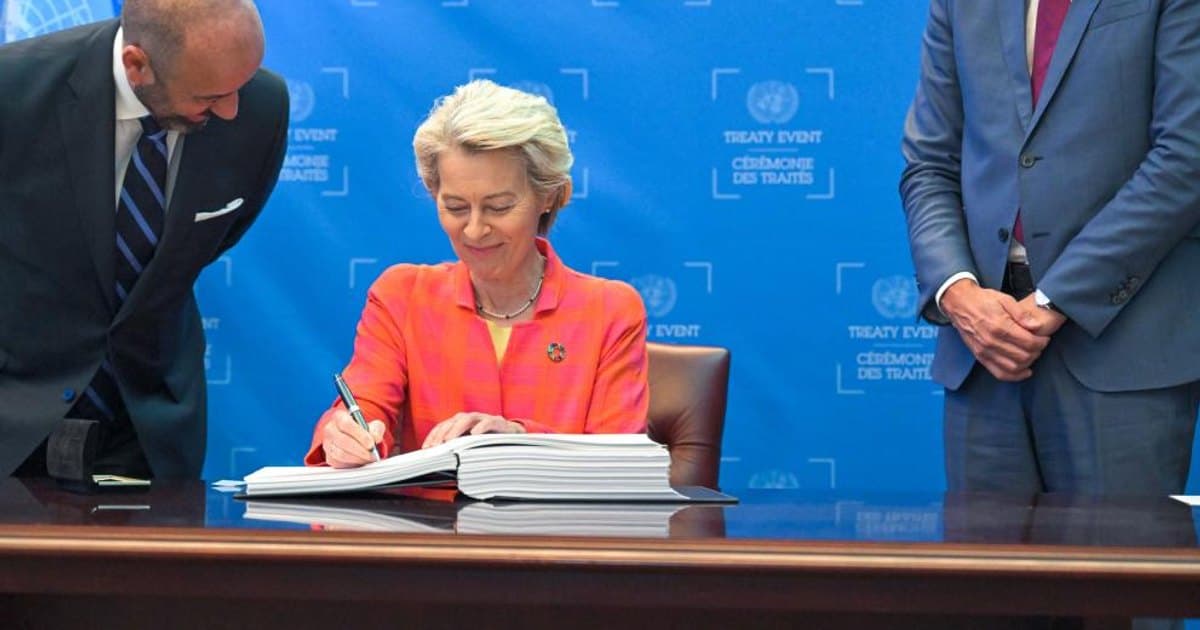
UN Agrees on Historic High Seas Treaty to Protect Ocean Biodiversity
UN members finalize a historic treaty to protect marine biodiversity in international waters, aiming to safeguard 30% of oceans by 2030.
After more than ten years of negotiations, United Nations member states have reached a landmark agreement on a treaty to protect marine life in the high seas — the vast expanse of ocean that lies beyond any single nation's jurisdiction. The pact, formally known as the agreement on Biodiversity Beyond National Jurisdiction (BBNJ), is set to be formally adopted at a later date.
The agreement is a key step toward the global goal of protecting 30% of the world's oceans by 2030, a target set at the 2022 UN biodiversity conference. While the high seas cover more than 60% of the global ocean and nearly half the planet's surface, they have historically received far less attention than coastal waters.
Ocean ecosystems are vital for life on Earth, generating half of the oxygen we breathe and absorbing a significant portion of human-caused carbon dioxide. However, these areas are increasingly threatened by climate change, pollution, and overfishing.
Under the new treaty, countries will be obligated to conduct environmental impact assessments for proposed activities on the high seas. The agreement also establishes a framework for sharing marine genetic resources — biological material from ocean plants and animals — which could have applications in pharmaceuticals and food.
The treaty will also permit the establishment of marine protected areas in international waters, helping to build resilience against climate change and protect endangered species and habitats. This is particularly important as many migratory species, including whales, sea turtles, and tuna, traverse ocean basins and cross national borders.
Currently, only about 1% of high seas areas are under protection, despite covering nearly half the Earth's surface. The treaty also addresses the North-South divide, as nations with greater resources have historically benefited more from high seas activities. The agreement represents a more holistic approach to managing ocean resources, balancing conservation with sustainable use under the framework of the UN Convention on the Law of the Sea (UNCLOS).