Harbin museum unveils 1943 journal detailing Unit 731 malaria tests on humans
A Harbin museum has released a 1943 Japanese army journal detailing malaria experiments on mentally ill patients, adding to evidence of Unit 731's wartime crimes.
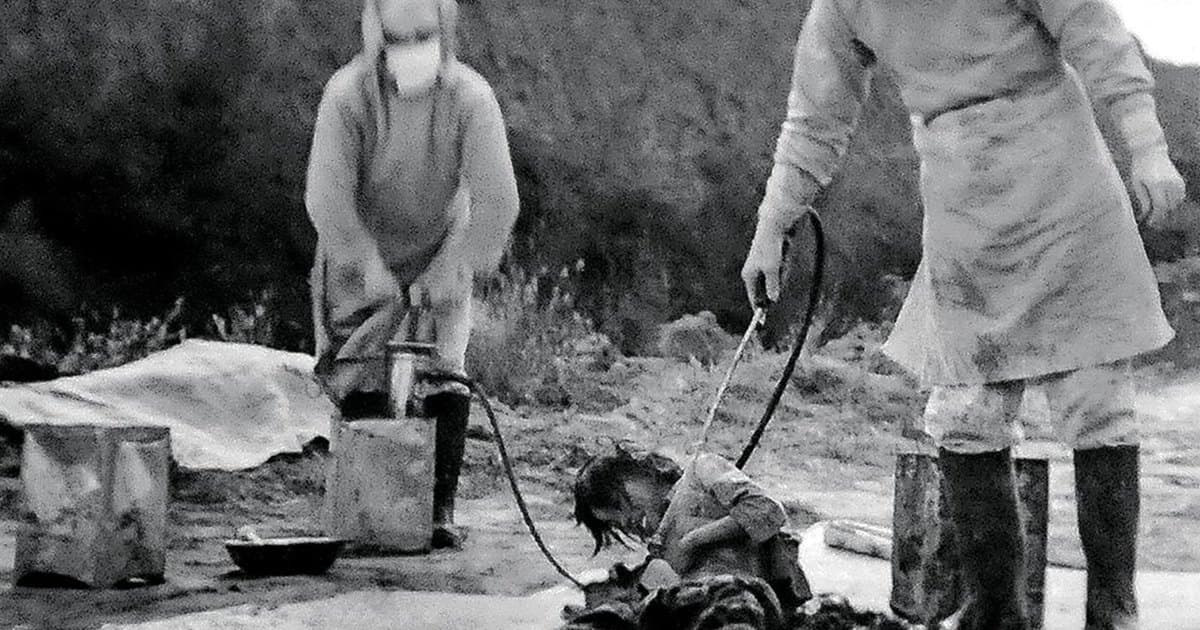
A museum in Harbin, northeast China, has brought to public attention a 1943 Japanese army medical journal that documents human experiments involving malaria, providing fresh evidence of wartime atrocities committed by Japan's infamous Unit 731.
The document, Issue 356 of the Medical Corps Journal, dated January 10, 1943, contains a paper titled "Human Inoculation Experiment Using Malaria-Infected Mosquitoes." According to the research, the experiment was conducted at a military hospital in Japan's Chiba Prefecture between May 20 and August 20, 1940.
Researchers first allowed mosquitoes to feed on blood from soldiers who had contracted malaria on the Chinese battlefield. The infected insects were then used to bite 10 Japanese soldiers hospitalized for mental illness, in order to observe the infection's progression.
Tan Tian, a researcher at the Exhibition Hall of Evidences of Crime Committed by Unit 731 of the Japanese Imperial Army, said the paper records that test subjects developed high fevers exceeding 40 degrees Celsius, along with chills, shivering, fatigue, anxiety, joint pain, and loss of appetite.
Further verification has linked Unit 731's chief, Shiro Ishii, and other core members to guiding the experiment. Previous archives also show the unit operated an insect division focused on mosquito research and field investigations.
Jin Shicheng, head of the museum's publicity, education, and exhibition department, said the discovery proves that Unit 731's insect research and development of insect-borne bacterial weapons formed a mature system that was applied both within the unit and in Japan itself. He described the findings as further evidence of the unit's anti-medical, anti-civilization, and anti-ethical nature, calling it a systematic, top-down crime against humanity.
During World War II, Japanese forces established a germ warfare network across Asia, with Unit 731's Harbin base serving as a top-secret center for biological weapons and human experimentation.