US and China unveil product lists under $30 billion tariff cut deal
The US and China released reciprocal product lists worth about $30 billion each under a tariff cut deal, following a Xi-Trump meeting in Washington.
The United States and China on Monday published reciprocal lists of products worth roughly $30 billion on each side that will benefit from tariff reductions, formalizing an agreement expected to lift bilateral trade.
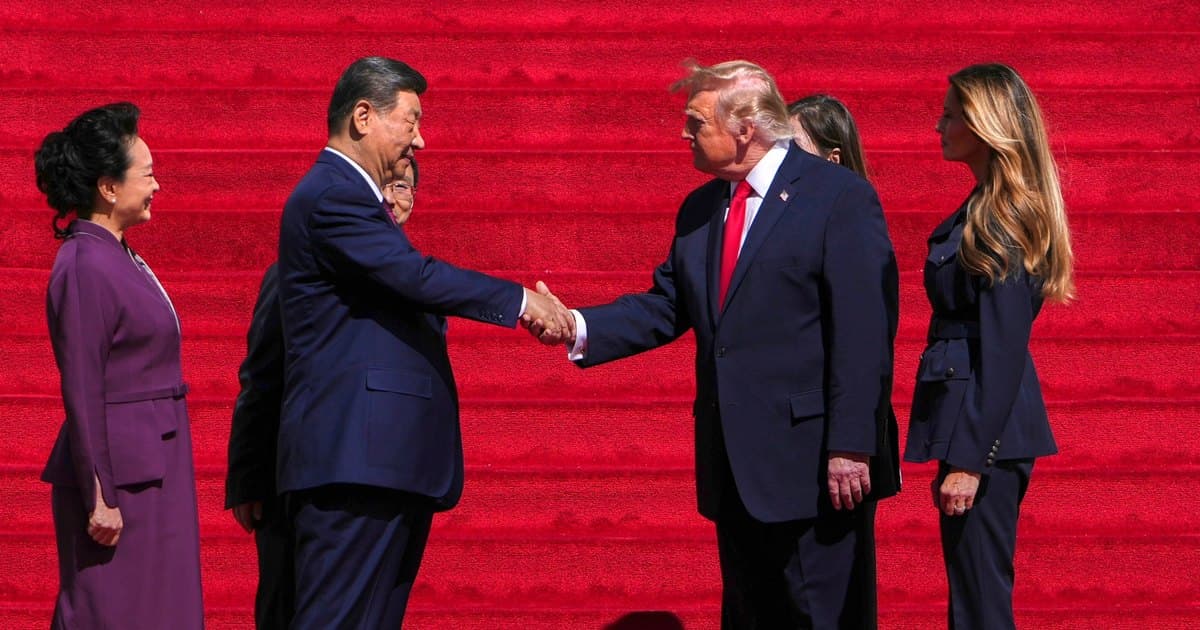
The announcement followed a meeting in Washington between Chinese President Xi Jinping and US President Donald Trump, Xi's first state visit to the US since 2015. The US had already eased tariffs on Chinese goods after rates reached as high as 145% last year amid heightened tensions.
China's commerce ministry said the arrangement would help strengthen trade cooperation. Its list covers 1,619 categories of US goods entering China, including agricultural commodities, personal care products, timber, medical equipment and coal. The US list for Chinese exports covers 77 items, among them fireworks, tableware, glass and wooden Christmas ornaments, and soccer balls.
Tariffs on more than 90% of the products will be set at most-favored-nation levels, effectively removing country-specific duties, according to the Chinese commerce ministry. US Trade Representative Jamieson Greer said the lists focused on non-sensitive goods that could gain from more favorable tariff treatment, adding that the deal could secure market access for US farmers, manufacturers, businesses and workers while giving American consumers cheaper imports such as household goods and toys.
Both sides said the lists may be adjusted later, with amendments likely on an annual basis. They also agreed to deepen agricultural cooperation through a group under the Board of Trade established in May.
Strategic sectors such as chips, electric vehicles and batteries were excluded from the agreement.
Analysts offered a mixed assessment. Lynn Song, chief economist for Greater China at ING Bank, called the outcome positive for the affected products and said it could deliver a more significant boost to bilateral trade than a smaller cut. Jacob Cooke, CEO of Beijing-based WPIC Marketing + Technologies, said the lower tariffs could benefit US consumer brands, noting that China's import list includes fast-growing categories such as hair care, personal care products and infant formula. Gary Ng, a senior economist at Natixis, said the US list for Chinese imports leaned toward consumer goods, which could help ease US inflation while allowing Chinese firms to export more of their excess capacity.
Others cautioned that the overall economic impact may be limited. Prashant Bhayani, chief investment officer for Asia at BNP Paribas Wealth Management, noted that US exports to China stood at about $68 billion in the first seven months of the year, while Chinese exports to the US were around $270 billion in the first eight months. He said a $30 billion deal each way would be more meaningful for US exports in percentage terms.
Analysts expect US-China trade to continue recovering for the rest of the year after steep US tariffs last year weighed on commerce. The two countries last week extended their broader trade truce by two months, to January, from a previous deadline of November 10.
China's trade surplus, which hit a record $1.2 trillion last year, is likely to stay elevated. It stood at about $800 billion by August and is on pace to exceed the 2025 record, according to Ecaterina Bigos, a senior market strategist at BNP Paribas Asset Management.
The US is also investigating China among 16 trading partners under its Section 301 probe into excess industrial capacity and could impose additional tariffs once the investigation concludes. Still, with further Trump-Xi meetings expected at the Asia-Pacific Economic Cooperation summit in Shenzhen in November and the Group of 20 summit in Florida in December, Song said he did not anticipate a major flare-up in trade tensions before year-end.
Some Chinese exporters welcomed the news. Richard Chan of Golden Arts Gifts & Decor, which makes Christmas trees and decorations in southern China and supplies markets including the US, called it positive and said both economies should help each other more. However, because most Christmas goods for this year have already been shipped ahead of the peak holiday season, the tariff reductions may have limited effect for now.