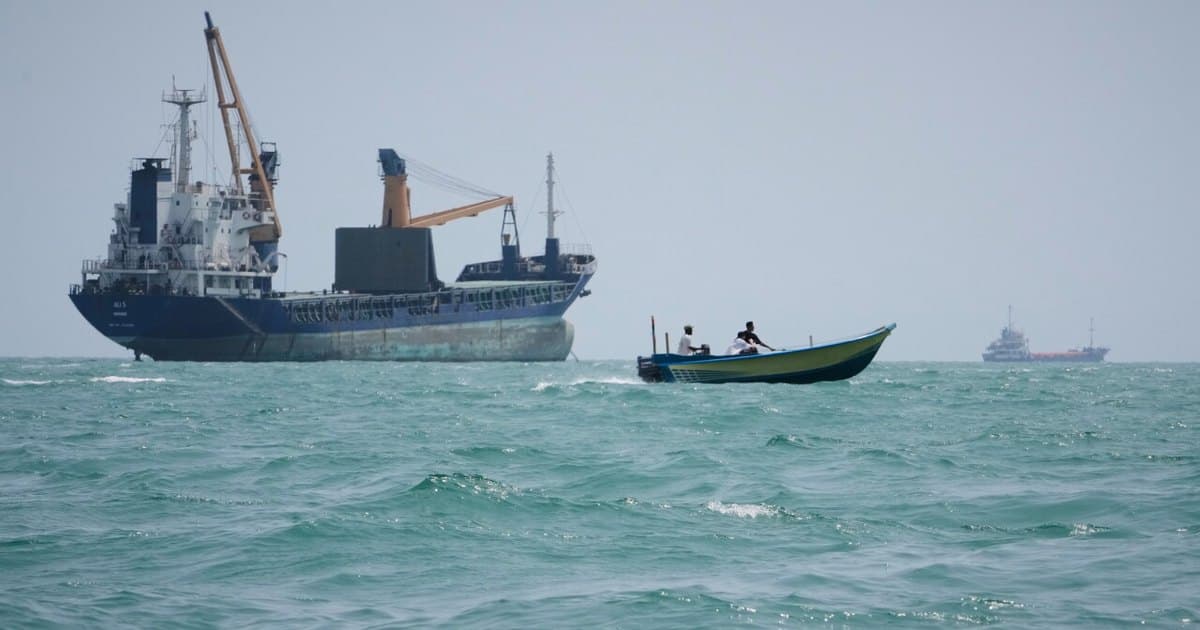
US rejects Iran's claim of strike on American vessel near Hormuz
US denies Iran's claim of striking an American vessel near the Strait of Hormuz, calling it a 'total lie' amid renewed hostilities.
The United States has dismissed Iran's assertion that it struck an unmanned American vessel attempting to enter the Strait of Hormuz, labeling the claim a "total lie." The denial comes as tensions between Washington and Tehran escalate following a new round of attacks.
The reported incident occurred a day after the US military said it had targeted three Iranian oil tankers in retaliation for missile attacks on American Navy warships. Analysts view the latest escalation as particularly risky, given that previous Iranian maritime operations had increasingly focused on commercial shipping.
The confrontation marks a return to active hostilities after roughly a month of relative calm. Recent strikes have centered on the Strait of Hormuz and Iran's southern coastline. At least five people were killed earlier in the week during a US bombardment, reviving memories of the conflict's early phase, which included a deadly strike on a school.
The war began on February 28 with US and Israeli attacks on Iran. Since then, both sides have sought to inflict military and economic damage. The Trump administration has pursued a dual strategy: responding militarily around Hormuz while targeting financial institutions and networks accused of helping Iran move money.
Iran, facing decades of sanctions and a US blockade of its ports, has relied on a shadow fleet of vessels to continue selling oil internationally. The Strait of Hormuz has become Tehran's key leverage point, as it is a vital artery for global energy supplies.
US Energy Secretary Chris Wright said on Sunday that roughly 9 million barrels of oil per day are currently transiting the strait, a figure higher than recent averages reported by tracking services. He added that energy flows, including regional pipeline supplies, could be at two-thirds or more of pre-conflict levels. However, the safe passage of tankers depends heavily on US Navy escorts, and Wright expressed hope that other nations would eventually contribute to maritime security.
The latest escalation follows US strikes on three Iranian oil tankers, which Washington said were launched after Iranian forces fired ballistic missiles at American warships. Tehran has responded by maintaining pressure on shipping routes it does not approve of, raising the risk of miscalculation.
The conflict originally centered on Iran's nuclear programme, but negotiations collapsed after a memorandum of understanding was signed in mid-June. Diplomats now indicate that the US, Britain, France, and Germany are seeking to refer Iran to the UN Security Council over alleged noncompliance with nuclear nonproliferation obligations.
With talks stalled, sanctions tightening, and military confrontations continuing, the Strait of Hormuz remains the flashpoint of a conflict that could easily spiral further.