US Policy Support May Cap Bond Yields, But Failure Risks Dollar Slump
Fresh US policy measures could cap Treasury yields, but failure to pull 30-year yields below 5% risks dollar slump and market correction.
Fresh US policy measures aimed at containing long-term Treasury yields could prevent a sharp rise in borrowing costs, but may not be enough to push yields significantly lower, according to BofA Securities.
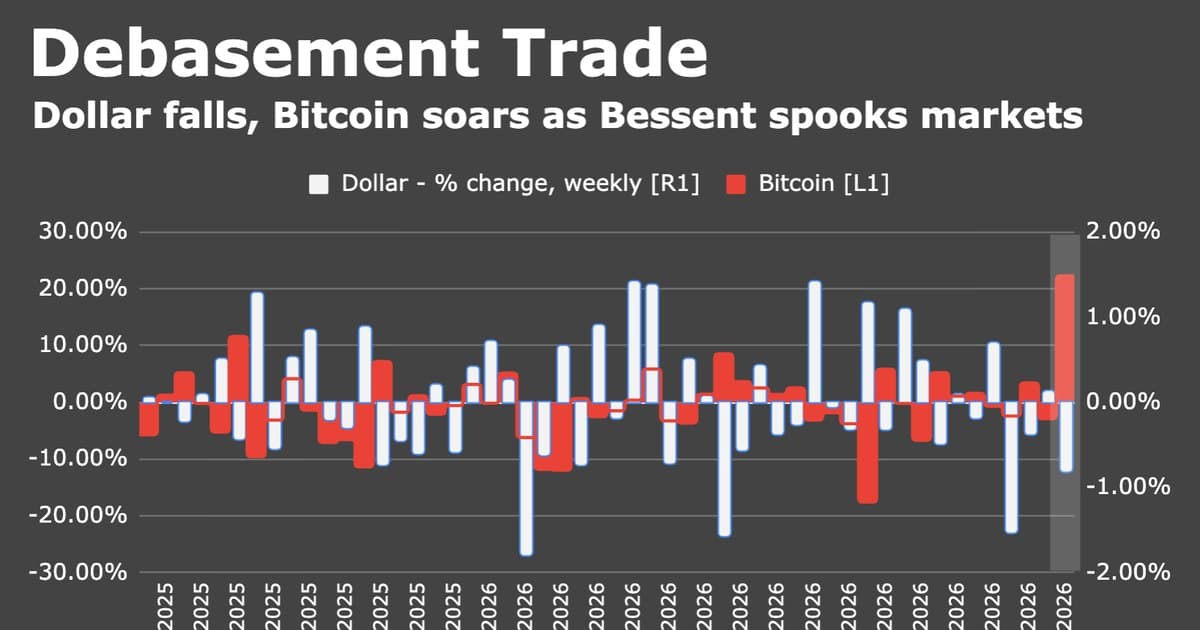
The brokerage warned that if policymakers fail to bring the 30-year Treasury yield below the critical 5% level, markets could see a weaker US dollar and a shift away from leveraged risk assets, including AI stocks, private credit, and cyclical financials.
BofA noted that the US administration is increasingly focused on preventing higher long-term borrowing costs from undermining government financing and the AI investment boom. The Treasury has doubled its long-end bond buybacks, following earlier measures such as dollar swap lines with Asian and Gulf economies and intervention to support the yen.
The brokerage described these steps as a growing policy effort to "fix" the fixed-income market, arguing they should cap, but not necessarily reduce, US bond yields. The US national debt has crossed $40 trillion, while net Treasury issuance is expected at around $2 trillion across 2026 and 2027. Corporate bond issuance is also rising as companies finance the AI investment cycle.
BofA highlighted that the administration remains 0-for-3 on its stated economic objectives of 3% GDP growth, a 3% budget deficit as a share of GDP, and an increase of 3 million barrels per day in US oil production. GDP growth has stayed below 2% for the past six quarters, the budget deficit is around 6% of GDP, and oil output has risen only about 0.3 million bpd since 2024.
The investment bank also pointed to growing investor optimism. Its Bull & Bear Indicator rose to 9.5 from 9.3, entering "extreme bull" territory, while weekly flows showed $40.1 billion into equities and $21.4 billion into bonds. US equities attracted $28.9 billion, the largest inflow in three weeks.
BofA continues to favour gold, while recommending contrarian exposure to long-duration REITs, regional banks, small-cap stocks, and Hong Kong property. Gold has gained around 4% year-to-date, compared with a 13.9% rise in global stocks, while bitcoin has fallen 16.9%.
However, BofA cautioned that if fresh monetary and fiscal support fails to contain long-term yields, the resulting policy credibility shock could trigger a US dollar slump and broader risk-off positioning, particularly ahead of the US midterm elections.