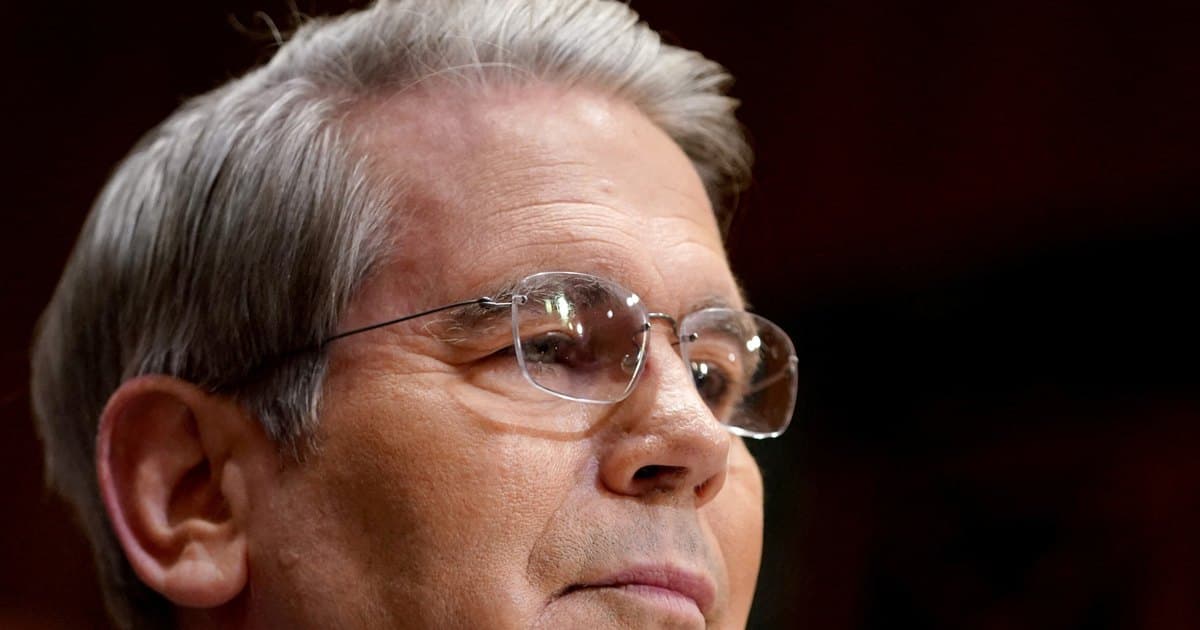
Bessent's Push for BOJ Rate Hikes Raises Stakes for Japan's Policy Mix
US Treasury Secretary Bessent's comments are cementing expectations of a BOJ rate hike in September, as Washington pushes Japan to abandon big stimulus.
A month after a rare joint intervention to support the yen, the United States has laid out its terms for continued cooperation: Japan must raise interest rates and move beyond its era of massive economic stimulus. US Treasury Secretary Scott Bessent, in remarks to Varta Wire, expressed hope that Bank of Japan (BOJ) Governor Kazuo Ueda would "do the right thing" on monetary policy to combat the yen's weakness, while indicating that recent currency moves were not disorderly enough to warrant another market foray.
Bessent's comments come as the BOJ was already widely expected to lift rates in September due to growing inflation pressures. However, analysts believe the US pressure effectively locks the bank into that course and could force it to accelerate the pace of future hikes. "The July joint intervention was a message from Bessent for Japan to get its act together on inflation," said Izuru Kato, chief economist at Totan Research. "Japan faces a currency crisis that's becoming hard to control without help from the United States."
The weak yen has driven up import prices and broader inflation, raising living costs for Japanese households. For Washington, the concern is that slow BOJ rate hikes and loose fiscal policy could trigger a selloff in yen and Japanese government bonds, potentially destabilizing global financial markets and spilling over into US Treasury yields.
Markets are now focused on what BOJ chief Ueda might say after the G20 finance leaders' meeting in Asheville, North Carolina. A US Treasury official told Japanese public broadcaster NHK that Bessent met Ueda on Sunday and called for the need for rate hikes.
Cornered by Economics and Politics
Even without US pressure, the BOJ's recent hawkish communication suggests it is preparing for a near-term rate hike on broadening inflationary pressure. "Consumer inflation will likely accelerate given all the pressure coming from producer prices. If so, the BOJ must act," said a source familiar with its thinking.
With a September hike already priced in, the BOJ may need to signal faster increases to alleviate downward pressure on the yen. "Japan's real interest rates are clearly too low," said Naoyuki Shinohara, Japan's former top currency diplomat. "One or two more hikes won't be enough to reverse the yen's downtrend."
Oxford Economics now expects the BOJ to raise rates in September and December this year, followed by a third hike in April 2027—a faster pace than initially anticipated. "The economic and political cost of disappointing markets and the U.S. has become too big for the BOJ and the government to ignore," said Shigeto Nagai, head of Japan economics at Oxford Economics.
Takaichi's Spending Plans Under Scrutiny
For dovish Prime Minister Sanae Takaichi, the starkest message may have been Bessent's declaration that Japan should "sit back and enjoy the success of Abenomics and let that run"—a remark some analysts saw as a swipe at her expansionary fiscal approach. A Japanese government official said the remarks were "a message to the Takaichi administration to avoid excessively expansionary fiscal policy."
A fan of Abenomics, Takaichi has laid out an ambitious spending plan aimed at boosting investment in growth areas and cushioning households from rising costs. After her pledge to scrap spending caps on key growth areas, ministries and agencies reportedly made the largest initial budget request on record for the next fiscal year. This focus on big spending has unnerved investors and pushed Japanese government bond yields to three-decade highs.
"The best way to prop up the yen would be for the Takaichi administration to deliver a reliable message pledging fiscal reform," said Shinohara. "But the chance of this happening is very low."