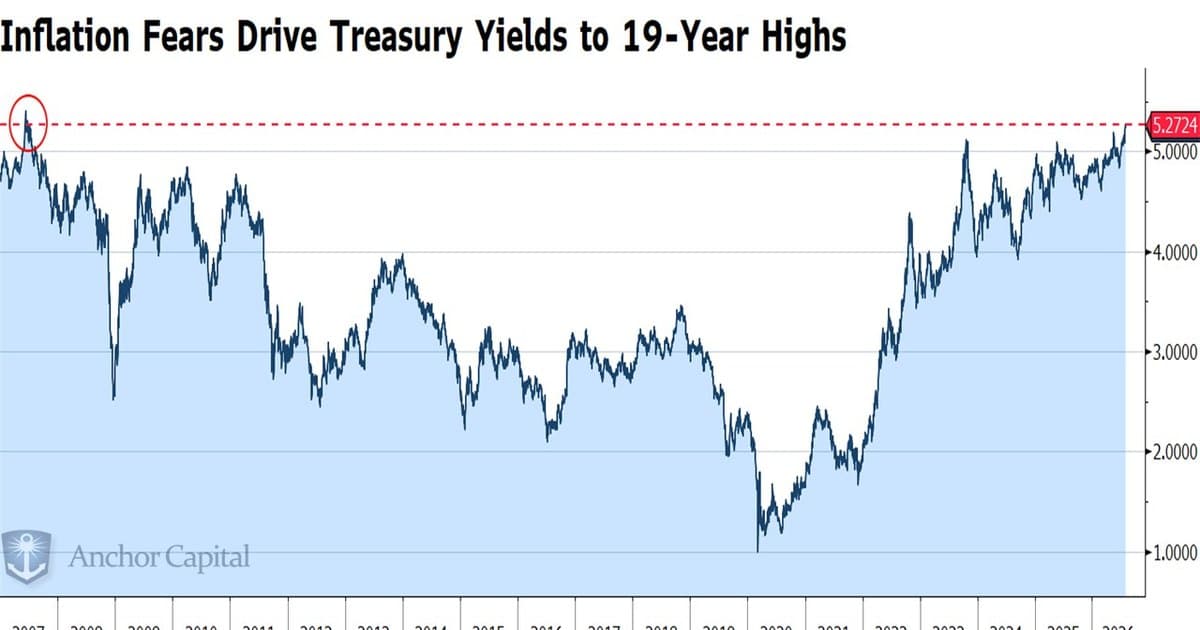
US Treasury yields scale 19-month peak as US-Iran clashes stoke inflation fears
US Treasury yields hit a 19-month high as fresh US-Iran attacks lift oil prices, fueling inflation worries and a global bond selloff.
US Treasury yields climbed to their highest level since January 2025 on Tuesday, as renewed military exchanges between Washington and Tehran pushed oil prices higher and reignited inflationary concerns. The 10-year Treasury note yield rose 2 basis points to 4.778%, a 19-month peak, while the 30-year bond touched 5.27% during Asian trading hours, close to levels last seen in over a decade.
The escalation follows Tehran's missile strikes on two US air bases in Jordan, a response to a US attack on Iran's Larak Island. Washington said it had targeted Iranian launchers that were laying mines in the Strait of Hormuz. The fresh fighting underscores the fragile nature of a conflict that has largely been waged through sanctions and economic pressure over the past six months.
Brent crude futures surged past $91 per barrel, amplifying worries that sustained energy costs could keep inflation elevated. The bond selloff spread globally, with Japan's 10-year government bond yield rising to a 30-year peak ahead of a closely watched auction. Germany's bund futures slipped to their lowest since 2011, while French OAT futures hit a record low in Asian hours.
Rising oil prices have kept inflationary pressures at the forefront of market concerns, complicating the outlook for central banks. Federal Reserve Chairman Kevin Warsh said on Friday that policymakers would "have work to do" unless they gain confidence that inflation is moving toward the 2% target, a remark seen as opening the door to possible rate hikes.
Market pricing now reflects a 66% chance of a Fed rate hike later this month, up from 41% a week earlier, according to the CME FedWatch tool. Traders are also pricing in higher odds of rate increases from the European Central Bank and the Bank of Japan this month.
"While Warsh did not provide forward guidance and the decision remains data-dependent, the balance of risks after Warsh clarified his reaction function has shifted in a hawkish direction," said Blerina Uruci, chief US economist at T. Rowe Price. "My new forecast is for a 50/50 chance of a hike in September."