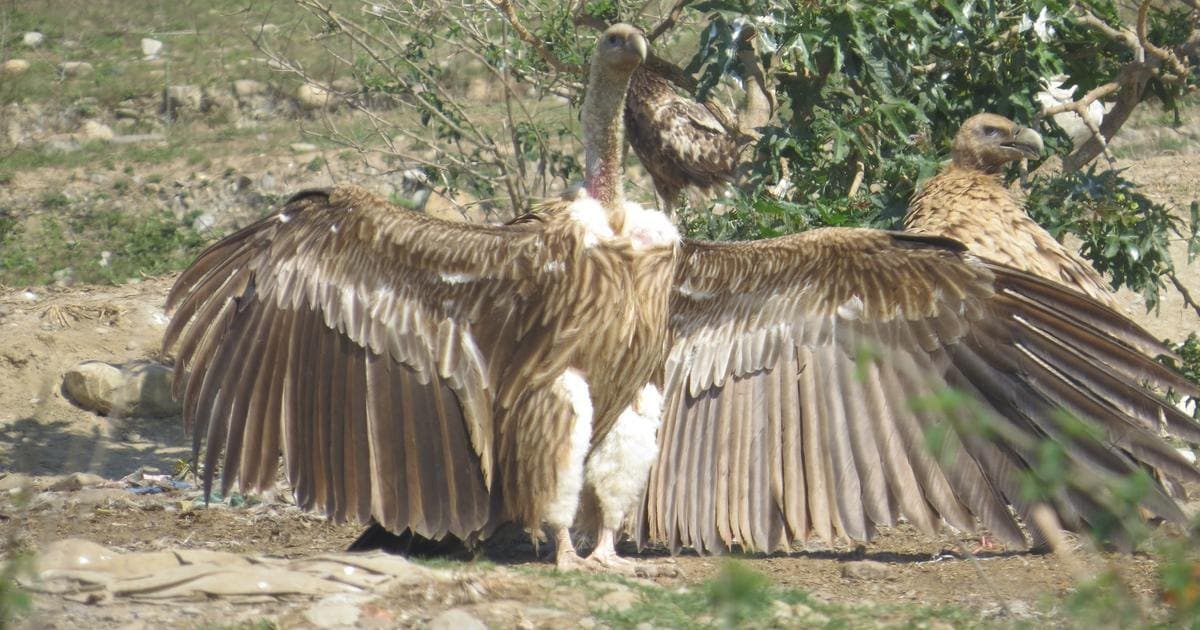
Relocating carcass dump 2.4 km cut vulture electrocution deaths near Dehradun
Study finds relocating a carcass dump 2.4 km from power lines reduced vulture electrocution deaths near Dehradun.
A study published in the Journal of Threatened Taxa has highlighted a practical conservation measure that may have saved vultures from electrocution near Dehradun, Uttarakhand. Researchers found that moving a livestock carcass dumping site 2.4 km away from high-tension power lines significantly reduced mortality among these large scavengers.
The study was based on 34 surveys conducted between May 2011 and February 2014 in the Sudhauwala region of Dehradun. During this period, researchers recorded 743 individual vultures belonging to five species. Of these, 46 carcasses were attributed to electrocution near high-tension power transmission structures.
The highest proportion of mortality relative to observations was recorded for the Himalayan griffon, followed by the Eurasian griffon and the cinereous vulture. The authors noted that while surveys were not systematic, the number of deaths observed suggested electrocution was a significant localised threat for these long-lived birds.
In April 2015, local authorities acted on these findings by relocating the carcass dumping site about 2.4 km away from the hazardous power infrastructure. Subsequent monitoring showed that vultures continued to use the new site, and no mortality events were recorded during the limited post-relocation observation period.
Other raptor species, including the black kite and crested serpent eagle, were also recorded at the relocated site. The study's authors, including Javed Anver of the Dehradun-based Wildlife Institute of India, concluded that relocating carcass dumping sites away from power infrastructure can be a practical conservation measure to reduce electrocution risk, with potential application in other affected areas.
Vultures remain among the most threatened birds globally, facing severe population declines across Asia and Africa due to poisoning, veterinary non-steroidal anti-inflammatory drugs (NSAIDs), food scarcity, and habitat loss. Electrocution from power infrastructure has been described as the most underreported threat. While no studies were conducted after 2015, the relocation demonstrated a simple, effective intervention that could be replicated elsewhere.