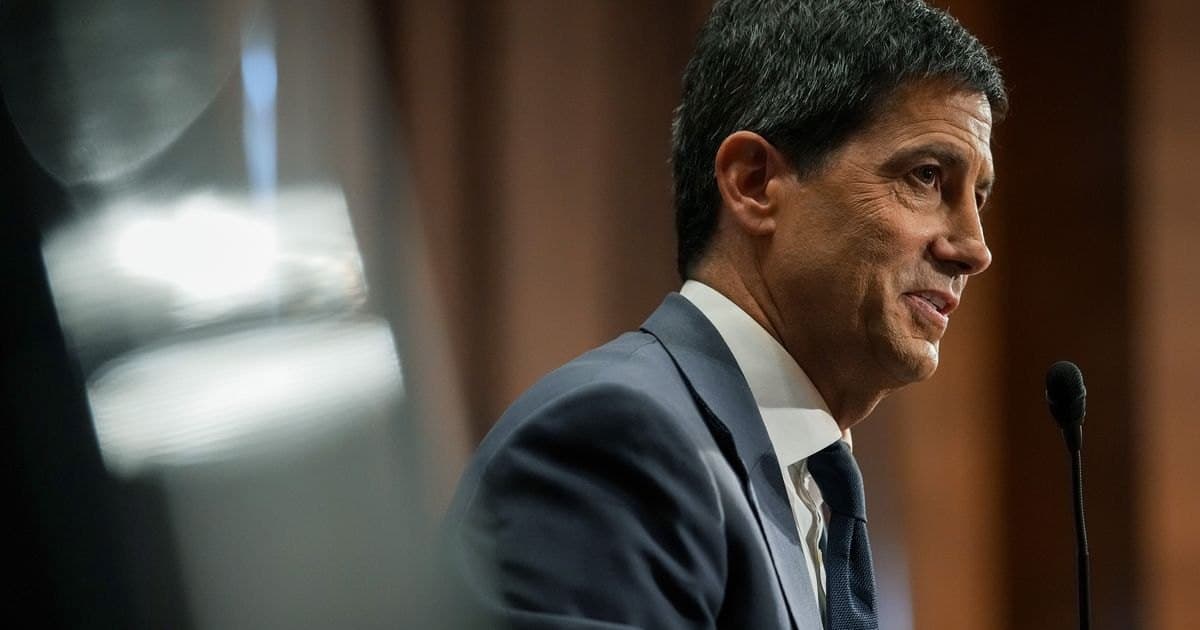
Warsh's Jackson Hole address set to test Fed's policy clarity
Fed Chair Kevin Warsh's Jackson Hole speech is under scrutiny as markets seek clarity on rate policy amid inflation and political pressure.
When Federal Reserve Chair Kevin Warsh takes the podium at Jackson Hole on Friday, it will mark one of the most anticipated addresses at the central bank's annual retreat in years. Warsh, who has deliberately kept a lower public profile than his recent predecessors, faces mounting pressure to clarify his approach to monetary policy.
His last public appearance, a late-July press conference, left markets unsettled over his willingness to raise interest rates to curb persistent inflation. The ambiguity pushed longer-term borrowing costs higher as investors priced in the risk of accelerating price growth.
Economists and Wall Street analysts are hoping for a clearer articulation of how Warsh views the Fed's response to inflation, which remains above the central bank's 2% target. The Fed's preferred inflation gauge stood at 3.7% in July, though price increases moderated in June and July after a spike in May driven by soaring gas prices.
Warsh has resisted providing "forward guidance" on future rate moves, arguing that such commitments limit the Fed's flexibility. He has also suggested that financial markets have grown overly reliant on these signals. Some economists counter that he could offer more insight into his policy framework without committing to specific actions.
The stakes are elevated for Warsh, who assumed the chairmanship on May 22 following Jerome Powell's tenure. Previous Fed chairs have used the Jackson Hole platform to address broad economic questions or signal shifts in approach. Powell's 2018 speech critiqued concepts like "neutral" interest rates, and by 2022 he used the venue to signal aggressive rate hikes, acknowledging the "pain" such measures would inflict.
Most analysts expect the Fed to hold rates steady at its mid-September meeting, though futures markets indicate investors anticipate a hike by December.
Political dynamics add another layer of complexity. President Donald Trump has continued to call for lower rates while defending Warsh, his appointee. Trump has also renewed efforts to remove Fed Governor Lisa Cook, a Biden appointee, which could allow him to shape a majority on the seven-member board.
If Warsh's remarks reassure markets, longer-term yields could ease. The 30-year Treasury bond recently hit a 19-year high, prompting Treasury Secretary Scott Bessent to launch an unusual bond-buyback program to push yields lower. Rising government deficits and heavy borrowing by tech firms for AI infrastructure have contributed to the upward pressure on rates.