Xi Calls BRICS Most Influential Platform for Emerging Markets at New Delhi Summit
At the 18th BRICS Summit in New Delhi, Xi Jinping hailed two decades of cooperation and said China will chair the grouping and host the 19th summit next year.
Chinese President Xi Jinping told the 18th BRICS Summit in New Delhi on Saturday that the grouping has grown into the world's most influential platform for cooperation among emerging markets and developing countries.
Addressing the first session of the summit, which was presided over by Indian Prime Minister Narendra Modi, Xi marked the 20th anniversary of BRICS cooperation. He said the mechanism had continued to grow and expand over two decades, showing remarkable vitality, and described the period as one of self-reliance and self-strengthening in which members explored development paths suited to their own national conditions.
He said the years had also been defined by members standing together through crises, including the global financial crisis, the COVID-19 pandemic and climate change, while safeguarding the common interests of the Global South and providing stability and positive momentum to the world.
Xi credited the grouping with a historic expansion and the creation of a comprehensive, multi-tiered cooperation framework, opening what he called a new stage of high-quality development for greater BRICS cooperation.
Turning to the international situation, he said the world is undergoing accelerated transformation, the Global South is rapidly gaining strength and the trend toward a multipolar world is unstoppable. At the same time, he warned that unilateralism and power politics are surging, multilateralism and the international order are under strain, and deficits in peace, development, security and governance are widening. He urged BRICS members to stand on what he called the right side of history and to steer the international order toward greater justice and equity.
Xi set out several priorities for the grouping. On innovation, he called for stronger cooperation in artificial intelligence, encouragement of open-source development and openness, and said BRICS countries are welcome to take part in the World Artificial Intelligence Cooperation Organization. China proposed an initiative to promote new industrialization through AI among BRICS members and expressed willingness to deepen cooperation on industrial and supply chains.
On security, he urged members to uphold a vision of common, comprehensive, cooperative and sustainable security, oppose Cold War thinking and bloc confrontation, reject violations of sovereignty and interference in internal affairs, and play a constructive role in resolving hotspot issues. He said China will work with fellow members on bringing peace and tranquility to the Middle East.
He also called for greater exchanges among civilizations, deeper cooperation in culture, tourism and education, and stronger youth exchanges, and for reform of global governance. He backed a multilateral trading system centered on the World Trade Organization and rejected protectionist measures, while urging the grouping to lead governance in emerging domains such as cyberspace, outer space and the deep sea and to amplify the voice of Global South countries.
Xi said solidarity and cooperation have driven the BRICS cause over its two-decade journey, and called on members to remain candid with one another, seek common ground while respecting differences, and respect each other's core concerns.
He announced that China will take over as rotating chair of BRICS and host the 19th summit next year, expressing readiness to work with all parties to build consensus and embark on what he described as BRICS' third "golden decade."
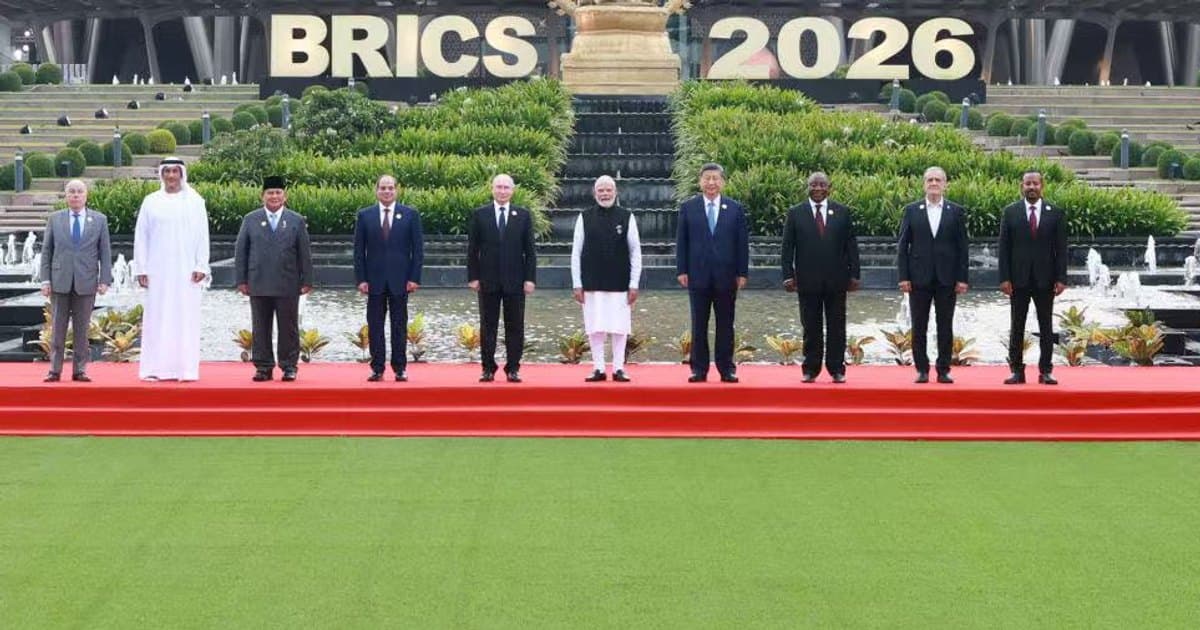
The session was attended by Russian President Vladimir Putin, South African President Cyril Ramaphosa, Iranian President Masoud Pezeshkian, Egyptian President Abdel Fattah El-Sisi, Indonesian President Prabowo Subianto, Ethiopian Prime Minister Abiy Ahmed, Abu Dhabi Crown Prince Sheikh Khaled bin Mohamed bin Zayed Al Nahyan and Brazilian Foreign Minister Mauro Vieira, among others. The leaders also visited a picture exhibition, planted trees and posed for a group photograph.