Xi's Egypt Visit Signals Cairo's Pivot Toward Strategic Autonomy
Xi Jinping lands in Cairo, marking a decade-high visit as Egypt deepens ties with China amid US reliability concerns.
Chinese President Xi Jinping arrived in Cairo on Tuesday for his first visit to Egypt in ten years, a trip that highlights how the Iran war is redrawing alliances across the Middle East. The conflict has disrupted global energy markets and prompted regional powers to question the long-term reliability of the United States as a security partner.
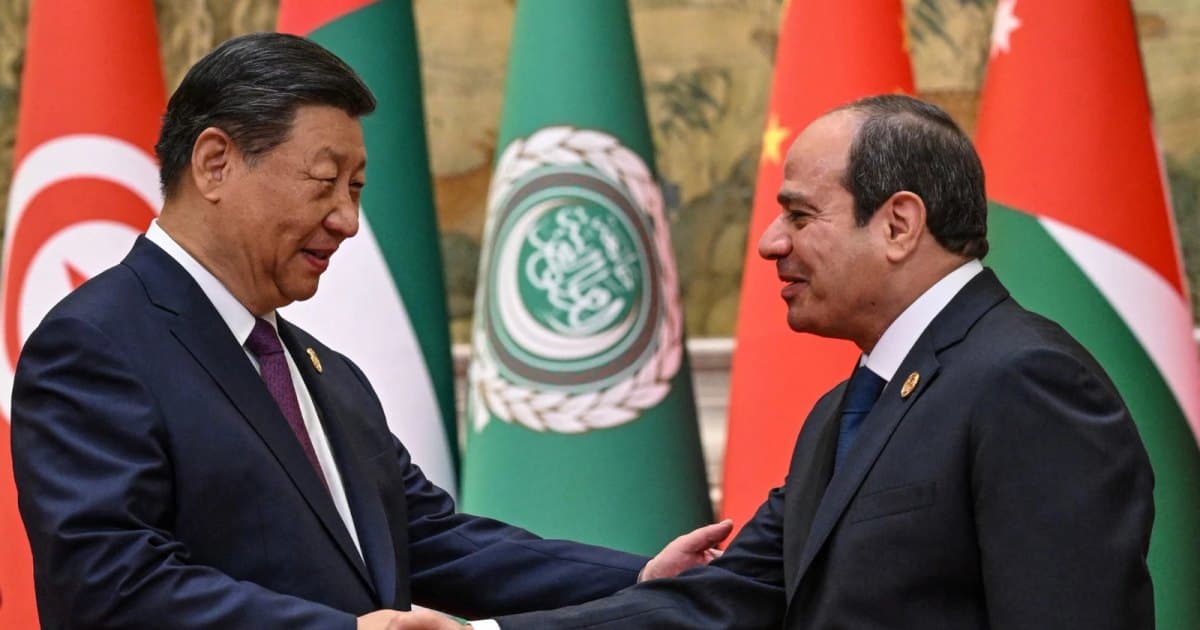
Egyptian President Abdel Fattah al-Sisi received Xi at Cairo International Airport with full honours, including a red carpet, uniformed soldiers, folk dancers, and young Egyptians waving Chinese flags, as shown on state television. In a state newspaper op-ed, Sisi described Egypt and China as partners working to strengthen the role of the Global South in international affairs.
The visit comes weeks after Egypt hosted its second annual joint military exercises with China, which included the first deployment of Chinese J-16 fighter jets to Africa and a rare air combat drill involving Chinese-made jets and French-made Rafales. A Chinese tanker was also photographed refuelling a Rafale, giving Beijing a close look at Western military technology.
Egypt, which receives about $1.3 billion in US military aid annually, has been diversifying its partnerships since at least 2014, when Sisi signed a strategic deal with Beijing. Analysts say the wars in Gaza and Iran have reinforced Cairo's desire for greater strategic autonomy, balancing ties with Washington, Beijing, Moscow, and Europe.
Chinese investment in Egypt has surged in recent years, flowing into ports, manufacturing, solar energy, green hydrogen, and satellite technology. Egypt's location—bordering Israel, Sudan, and Libya, and hosting the Suez Canal—makes it a strategic linchpin in a volatile region, and an obvious stop for Xi, who is also expected to visit India and the US later this month.